How I reduced white-label customization from days to 10 by building a scalable design system
📍CONTEXT / PROBLEM / GOAL
2-Weeks project • Mobile • Time optimization
Context
I was working on a white-label product where each new client required customizing branding elements like colors, text, and UI components across multiple prototypes.
This process was essential for sales and product teams to present tailored solutions, but it didn’t scale.
Problem
Every new client meant manually updating dozens of screens.
What should have been a quick customization process often took 1–2 days, depending on feedback cycles.
This created 3 main issues:
• Slow turnaround for client presentations
• High dependency on designers for simple changes
• Limited ability for sales teams to experiment and iterate quickly
Goal
Allow the entire product UI to adapt instantly to different clients with minimal effort.
This will allow switching between clients in just a few clicks — with the entire interface updating automatically.
🧩 MY ROLE
Improving design system scalability
Enabling faster client customization workflows
💡SOLUTIONS
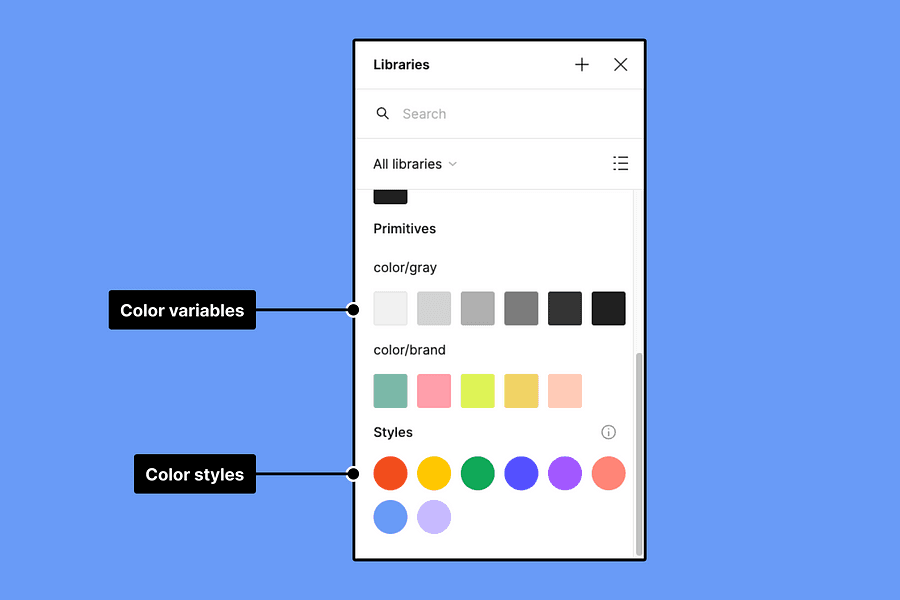
✅ Tokenized color system
A tokenized color system (primary, secondary, complementary)
✅ Dynamic text variables
Dynamic text variables (e.g. company name, labels)
✅ A multi-mode structure
A multi-mode structure, where each client had its own configuration
✅ Full integration
Full integration with the design system and prototypes
This allowed switching between clients in just a few clicks — with the entire interface updating automatically.
🧠 KEY INSIGHTS
Designing for non-designers
I intentionally built the system so that sales and product teams could use it without design support.
This reduced bottlenecks and increased speed across teams.
Using variables instead of static styles
Variables enabled real-time updates across the entire UI, something traditional styles couldn’t handle at scale.
Centralizing customization in the design system
Instead of editing each prototype manually, all customization logic lived in one place — making updates consistent and scalable.
📈 RESULTS
Reduced customization time from 1–2 days to a few minutes
Enabled non-designers (sales & PMs) to create client-ready prototypes independently
Increased speed of client presentations and iterations
Improved ability to experiment with different branding scenarios
📚 LEARNINGS
• Design systems should go beyond UI consistency — they should enable business scalability
Empowering non-designers can unlock speed and revenue opportunities
Investing in structure upfront saves exponential time later
This project reinforced how design can directly impact business performance.
By shifting from manual work to a scalable system, we didn’t just improve efficiency —
we changed how teams collaborated and how quickly the company could respond to new opportunities.